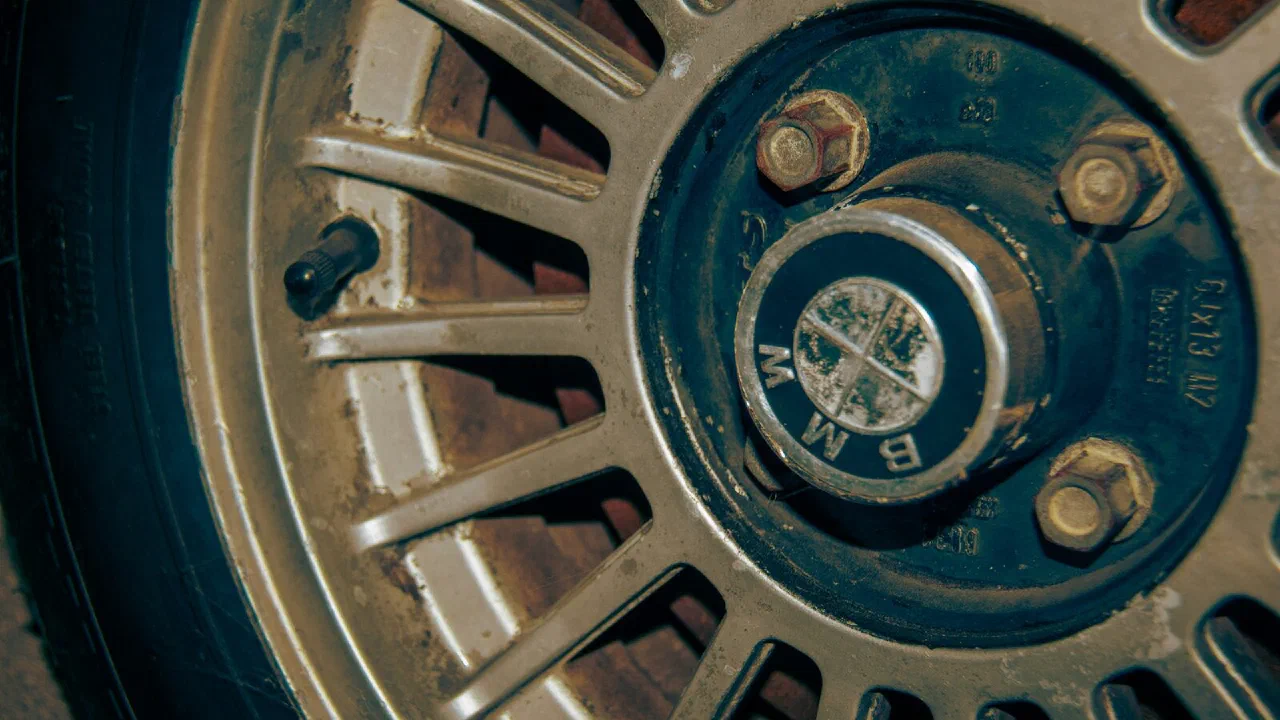
Do this one. A wheel bearing replacement cost of three to five hundred dollars at one wheel is not a break-even question, because the failure mode is not “the noise gets louder” — and unusually for this vertical, the two biggest published sources land within a few dollars of each other, so there is not much room to be overcharged either.
That second part is worth noting, because it almost never happens. On most jobs on this site the published figures differ by a factor of two or more. Here they do not.
What a wheel bearing replacement costs at one wheel
Kelley Blue Book gives one figure: “The national average is about $350 to fix the wheel bearings at one wheel.”
RepairPal’s estimator, whose figures carry the note “Estimates last updated September 3, 2026,” says: “The average cost for a Wheel Bearing Replacement is between $346 and $504.”
| Source | Figure | Scope |
|---|---|---|
| Kelley Blue Book | about $350 | One wheel |
| RepairPal | $346–$504 | National average, one bearing |
KBB’s single number is the bottom of RepairPal’s range. Both were checked 27 September 2026. If you have been quoted $420 for one wheel, you have been quoted the going rate, and the useful conversation is not about the total.
Two-thirds of the bill is getting to it
RepairPal splits its figure: “Labor costs are estimated between $226 and $331 while parts are priced between $121 and $172.”
At the midpoints that is $278.50 of labour against $146.50 of parts — labour is about two-thirds of this job. Which tells you where the money is and, more usefully, where it is not.
The part is a sealed unit with a retail listing you can read before you walk in. The labour is book time multiplied by the shop’s hourly rate, and on a modern car with a pressed-in bearing or a one-piece hub assembly, that time is what it is. Shopping the part saves you tens of dollars on a four-hundred-dollar job. Shopping the rate, or the shop, is the only thing that moves the larger number.
So the question at the counter is not “can you do better on the part”. It is how many hours and at what rate — the same question that decides whether any big job is worth authorising.
You do not automatically need the other side
This is the single most valuable sentence on KBB’s page, and it is the one a shop has no particular reason to volunteer:
“If the wheel bearings need replacing at one wheel, you don’t necessary need to replace the bearings at the other wheel on the same axle.”
(The typo is KBB’s; the sentence is quoted as printed.)
Bearings are not brake pads. Pads wear as a pair because they are doing the same work on the same axle, and replacing one side only is how you end up with a pull. A bearing fails as a unit, for its own reasons, and the one on the other side has its own remaining life.
Which makes “we’ll do both while we’re in there” a question rather than an instruction. Sometimes it is the right call — if the second side is also noisy, or if the labour genuinely overlaps enough that the second bearing is nearly free. Often it is a doubling of the largest line on the ticket. Ask which it is, and ask what the second side was found to be doing. A quote for two bearings where only one was diagnosed is a quote for one bearing and one sale.
Why this one is not a cost decision
Every other post here ends somewhere on a spectrum between “due” and “not yet”. This one does not, and the reason is on KBB’s own page: in the worst case, it says, “the wheel could come off while you’re drive.”
There is a money argument too, and it runs the same direction. KBB notes that ignoring worn bearings “can damage the vehicle’s inner or outer CV joints.” That converts a job with a known ceiling — call it $504 at the top of RepairPal’s range — into a job whose cost you find out afterwards. A CV axle is its own line item, and it has its own figure.
That is the whole verdict. Deferring a bounded repair into an unbounded one is not saving money; it is choosing not to know the number yet.
What this site will not do is give you a threshold here, because there is not one to give. Pad thickness has a figure and tread depth has a figure — a measurement you or an inspector can take, against a specification. A bearing does not present that way to an owner. Where a job is diagnosed by sound and by feel rather than by a number, the honest answer is that you cannot check it from the driveway, and “it is probably fine” is not a reading.
The per-vehicle spread, and what it is for
RepairPal publishes model-specific figures under its national average, and on this job they run wider than the average suggests:
| Vehicle | RepairPal estimate |
|---|---|
| Ford F-150 | $195–$245 |
| Nissan Altima | $288–$560 |
| Toyota Camry | $309–$515 |
| Ford Explorer | $310–$435 |
| Honda Civic | $320–$505 |
| Toyota Corolla | $322–$506 |
| Honda CR-V | $402–$592 |
| Honda Accord | $420–$588 |
From $195 at the bottom to $592 at the top — a factor of three across eight of the most common vehicles on American roads, on the same job. Estimates last updated 3 September 2026.
Use the row for your car, not the headline. An Accord owner quoted $470 is inside RepairPal’s own figure for an Accord and above the national average; an F-150 owner quoted the same $470 is nearly double RepairPal’s figure for an F-150 and should ask why. A national average across those eight rows is a number that describes none of them.
What to ask before you authorise it
- “Which wheel, and how was it diagnosed?” A specific wheel and a specific finding. “One of the fronts” is not a diagnosis.
- “Is the other side being replaced, and was it found to be failing?” Per KBB’s sentence above, the second one is a separate decision with a separate answer.
- “Bearing or hub assembly, and how many hours?” These are different parts and different book times. It is the hours, not the part, that account for two-thirds of the bill.
- “If I drive it for two weeks, what gets worse?” Here the answer is a real one — the CV joint — which is precisely why the answer to the job itself is yes.
Then authorise it. On a car you intend to keep, four hundred dollars against a wheel bearing is one of the least controversial cheques in this whole queue.