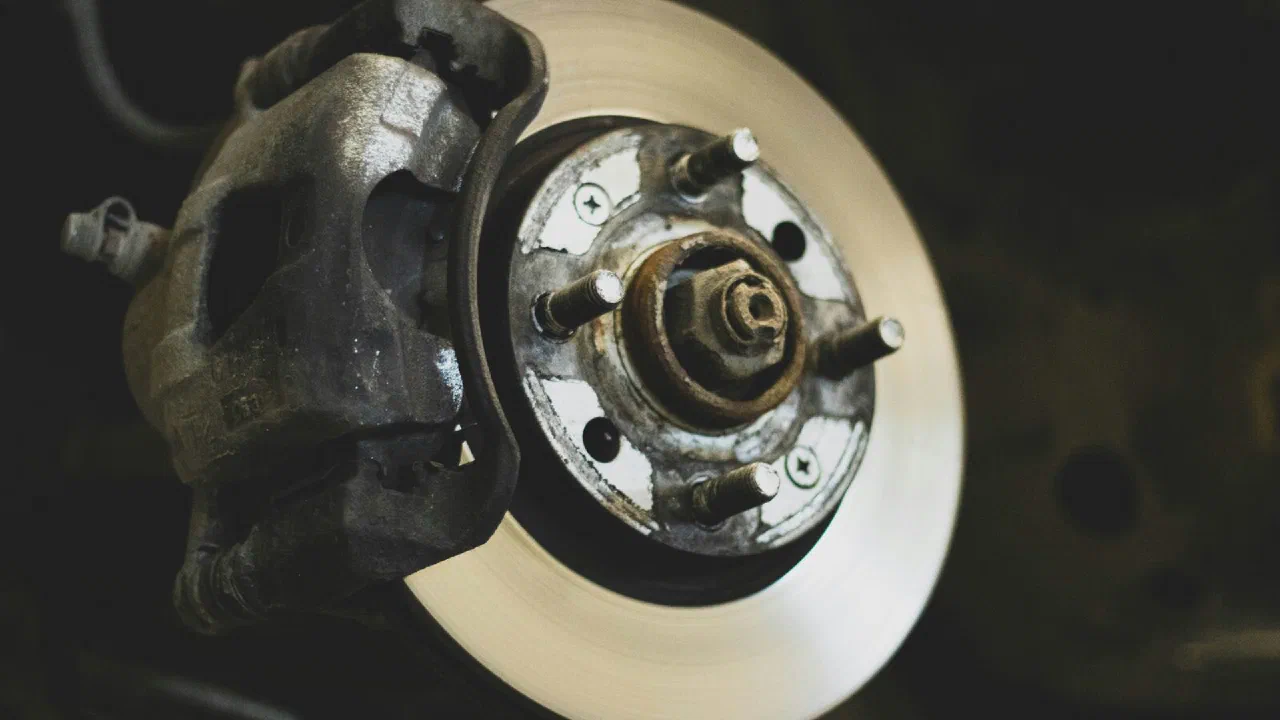
Pads only, unless the rotor is under the minimum thickness stamped on it or the shop can show you scoring you can catch a fingernail in. The rotor has a number cast or stamped into its hat, that number is the whole test, and it costs nothing to ask for the measurement beside it.
This matters because “while we’re in there” is the single most expensive phrase on a brake quote, and it is almost always attached to rotors.
What each version of the job costs
RepairPal’s national estimator, checked 4 September 2026, prices the two jobs separately:
Read those two rows together and the important thing is not the totals. It is that the labour lines overlap almost entirely. To replace pads the caliper has to come off; to replace rotors the caliper has to come off. When both are done in one visit you are not paying both labour lines — the second job’s hours are largely already bought.
So the real question is never “pads or pads-and-rotors as two prices”. It is: what does adding the rotors add?
What adding rotors actually adds
Mostly, the price of the rotors. And that is where the published figures stop agreeing.
Jiffy Lube publishes aftermarket rotors at $30 to $75 each (checked 4 September 2026) — call it $60 to $150 for a pair on one axle. RepairPal’s parts line for the same job is $406 to $452.
Neither number is a lie. They are pricing different parts — a budget aftermarket rotor and something closer to an OE-grade or coated one — and neither page says which. What it means for you is that “rotors add about $400” is not a fact you should accept from an estimator, and “rotors are $30” is not a quote you should expect. Ask what rotor, by brand and part number, and what it costs.
The measurement that settles it
A rotor has a minimum thickness specification, and on nearly every car it is stamped or cast into the rotor’s hat — the flat face near the wheel studs. Pennsylvania’s inspection standard, 67 Pa. Code § 175.80(e)(7)(vii), makes the reject condition explicit: the vehicle fails when “the disc thickness is less than minimum stamped on assembly or less than manufacturer’s specifications.”
That is a hard threshold and it decides the job. A rotor measured above its stamped minimum, with enough material left to survive another pad set, does not have to be replaced because new pads are going on. A rotor at or below it does, and no argument about price applies — this site does not talk anyone out of a brake repair on cost grounds, and a rotor under spec is the clearest example of why.
Ask for two numbers: the stamped minimum, and the measured thickness. A shop with a micrometer can give you both in under a minute. Your own state’s standard is the one that governs your inspection; the thresholds and the wording differ.
When rotors genuinely are due with the pads
There are cases where doing both together is the cheaper decision rather than the upsell, and it is worth naming them so the “not yet” reading stays honest:
- The rotor is at or under its stamped minimum. Settled. Nothing else on this page applies.
- Scoring or grooving deep enough to feel. New pads bedding into a scored surface wear unevenly and you buy pads twice.
- The rotor is already at minimum with pad life to come. If it will not survive the pad set going on today, doing it now costs the parts; doing it in six months costs the parts plus the labour again.
- Pulsation under braking that survives a proper diagnosis. Uneven thickness variation is a rotor problem, not a pad problem.
What is not on that list: mileage, age, the fact that the wheels are already off, or the rotors having been resurfaced once. What rotor replacement costs, and when resurfacing is enough takes the resurfacing question on its own.
What to say when the quote arrives with both
The most useful thing you can do is separate the lines before you respond to the total. A quote that reads “front brakes — $780” is not answerable. The same quote broken into pads, rotors, hardware and labour is.
- Ask for the pad measurement at the thinnest point and the rotor’s measured thickness against its stamped minimum.
- Ask for the rotor’s brand and part number, and what the shop is charging for it.
- If the rotors are above minimum, ask for the pads-only price as its own number.
If the answer to (1) is that the rotors are under spec, authorise the whole job. If the answer is that nobody measured, you have learned the more important thing, and it is worth reading the quote against what the job actually costs before you sign.